Built locally, not imported
We manufacture every honeycomb shade in-house — measured, cut, assembled, and quality-checked locally. Typical turnaround is 2–3 weeks from measurement to installation.
 BLINDS
 Custom honeycomb shades — also called cellular shades — trap a layer of air inside pleated cells to insulate your windows against heat, cold, and outside noise. They're the only window covering with a built-in insulating air layer, not just light control: single- or double-cell, sheer to room-darkening, with top-down/bottom-up and motorized options.
Built locally for energy-conscious homes across Metro Vancouver, measured and installed by our own crew. Backed by the HT Worry-Free Warranty.
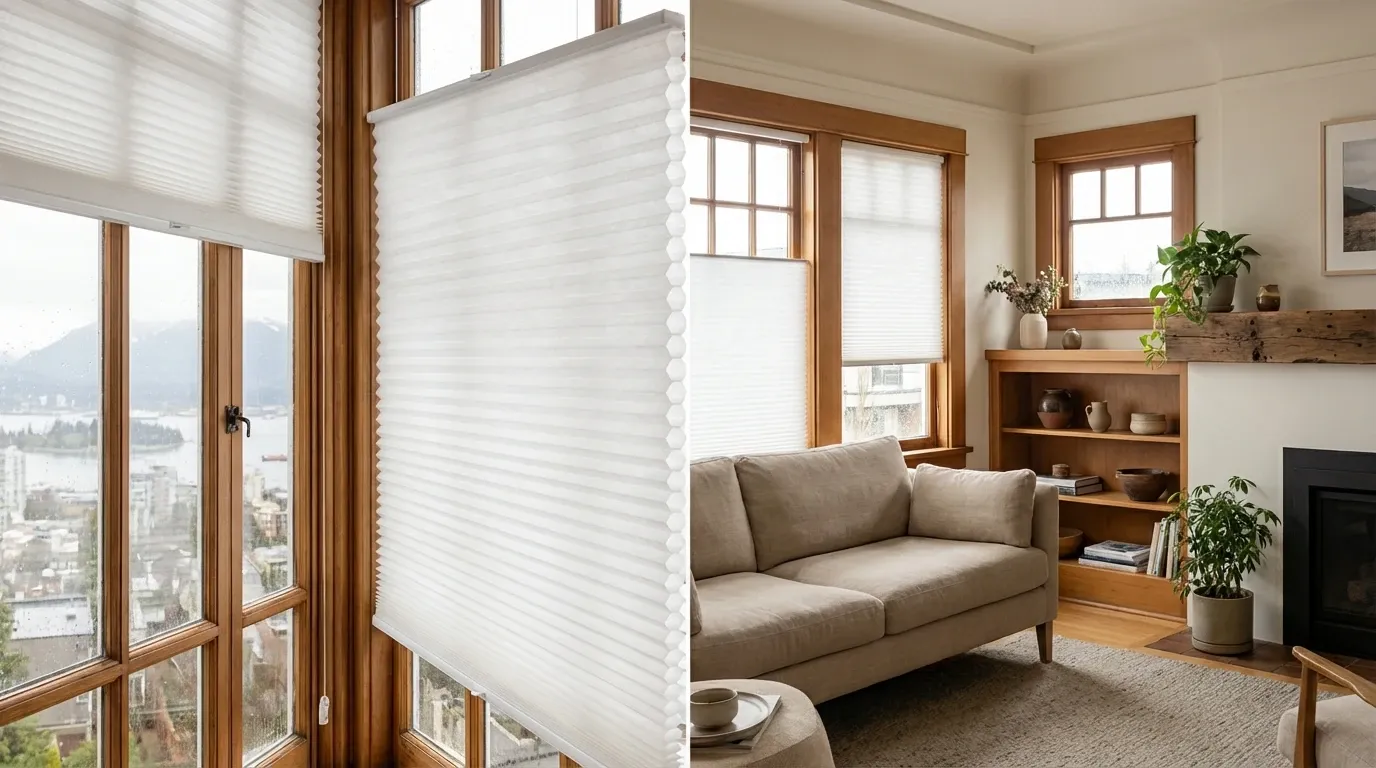
HT Blinds is Vancouver's factory-direct window coverings manufacturer. We build custom honeycomb shades — also called cellular shades or honeycomb blinds — locally, then measure and install them with our own crew. Sheer to room-darkening fabrics, single- and double-cell construction, and top-down/bottom-up or motorized control, with a typical turnaround of 2–3 weeks from measurement to installation. No middlemen. No markup. No overseas lead times.
We manufacture every honeycomb shade in-house — measured, cut, assembled, and quality-checked locally. Typical turnaround is 2–3 weeks from measurement to installation.
The crew that measures your windows is the crew that installs your shades. One accountable team from first measurement to final fit. No middlemen, no markup, no handoffs.
Every honeycomb shade passes the HT Five-Point Check before it ships and is covered by the HT Worry-Free Warranty — fabric, cells, hardware, and motors.
No stock sizes. Single- or double-cell construction in sheer, light-filtering, and room-darkening fabrics — cut to your exact measurements and matched to each room and orientation.
Start with opacity, then choose single- or double-cell construction — single-cell for a clean, slim profile, double-cell for the strongest thermal and acoustic performance. Every fabric works in both.
A light, airy weave that gently diffuses daylight for an open feel. Best where you want softness and visibility without heavy shading — living rooms and kitchens.
Softens daylight and cuts glare while keeping the room bright and comfortable. The go-to opacity for everyday living spaces that want light without harshness.
Blocks most light for deeper privacy and better sleep. The right choice for bedrooms, nurseries, and media rooms, or any room that needs stronger light control.
One shade, two fabrics — a sheer or light-filtering top paired with a room-darkening bottom. Daylight from above, privacy below, set with top-down/bottom-up control. Day-to-night flexibility in a single window covering.
From a simple cordless lift to full top-down/bottom-up and smart-home automation. Match the control to how often you adjust the shade and how you use the room.
The standard operation — lift from the bottom for daylight while keeping privacy where you need it. Clean and cordless, suited to street-facing windows and main-floor rooms.
The signature honeycomb control. Lower from the top for daylight or raise from the bottom for privacy — both rails move independently, so you balance light and privacy through the day.
Our own motor line in battery, DC or AC, controlled by remote, app, or voice. Works with both standard and top-down/bottom-up shades.
Honeycomb shades in bedrooms, living rooms, nurseries, and condos across Metro Vancouver. Single-cell and double-cell, light-filtering to room-darkening, standard and top-down/bottom-up — see how cellular shades come together in real spaces.
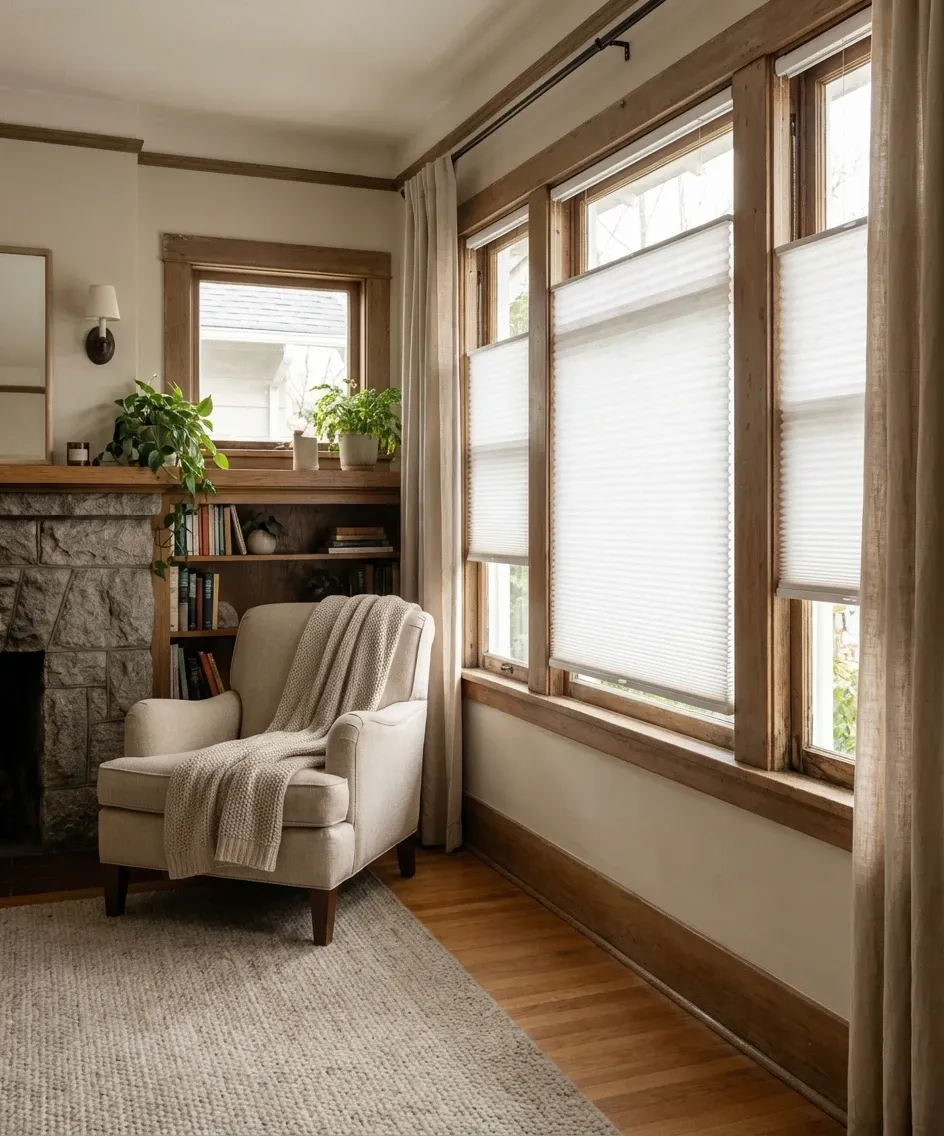
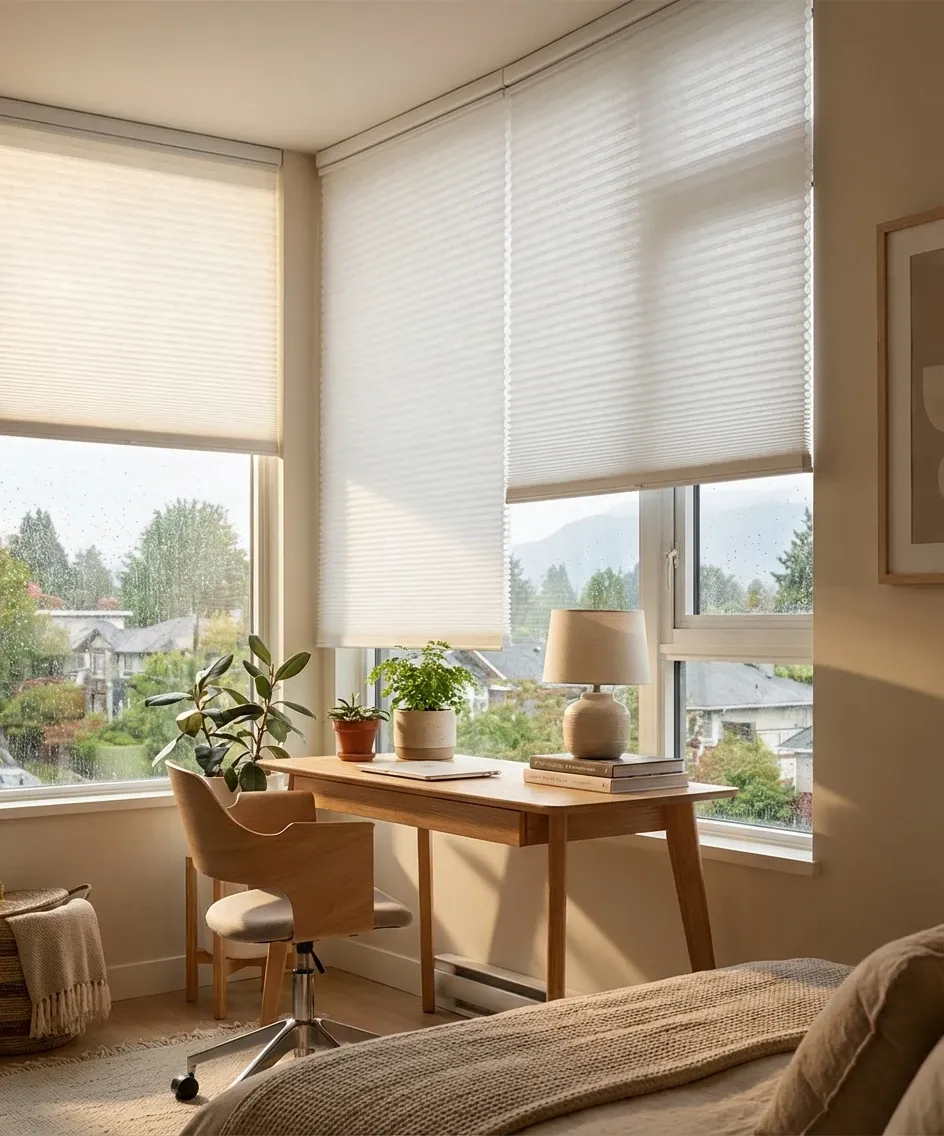
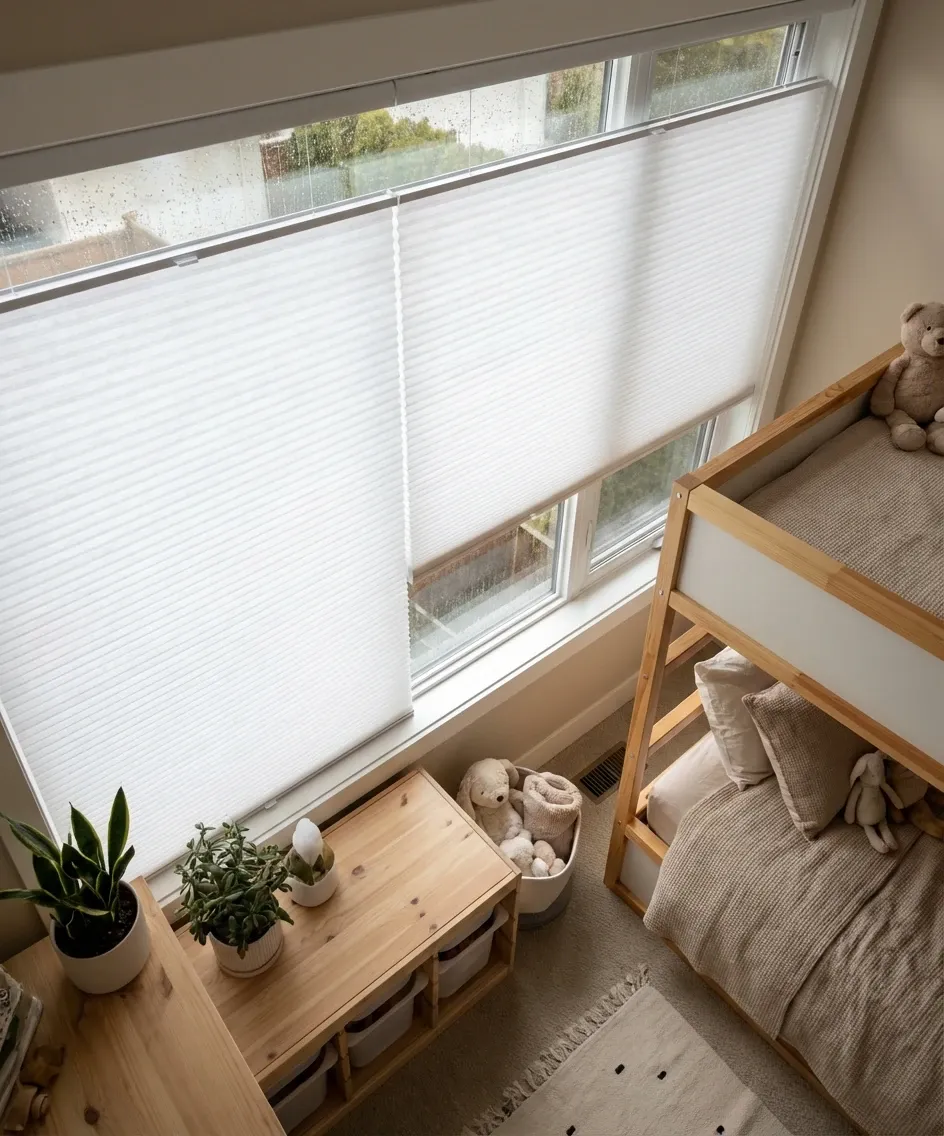
We measure every window — exact openings, mounting depth, and ceiling conditions.
Choose opacity, single- or double-cell construction, and control. We match the system to each room and orientation.
Cut, assembled, and quality-checked locally — made to your exact measurements, not stock sizes.
Our own crew installs and fits every shade. Typical turnaround: 2–3 weeks from measurement to installation.
Covers fabric, cells, hardware, and motor systems, backed by 25 years of local manufacturing and a dedicated service-request system.
Every shade passes before it ships: operation, function, durability, finish, and dimensional accuracy.
Energy performance — cellular construction adds a measurable insulating air layer at the window, useful for older or single-pane glass and a fit for energy-conscious and green-building projects.
A honeycomb shade is made from pleated fabric that folds into rows of hexagonal cells — the honeycomb cross-section that gives the product its name. Lower the shade and those cells trap a layer of still air between the glass and the room. That air layer is the point: it slows heat transfer, so rooms stay cooler in summer and hold warmth in winter. Single-cell construction gives you one layer of pockets and a clean, slim profile; double-cell stacks two layers for stronger thermal and acoustic performance and a slightly deeper shade body.
The same air pockets that insulate also absorb sound. Honeycomb shades dampen outside noise more effectively than any other shade type — useful for condos on busy streets, bedrooms above traffic, and rooms facing construction. They won't replace an acoustic upgrade or a new window, but the comfort difference is real, and homeowners consistently notice it on older or single-pane glass.
Light control comes from the fabric. Sheer diffuses daylight for an open, airy room. Light-filtering softens daylight and cuts glare while keeping the space bright. Room-darkening blocks most light for sleep and privacy. A two-fabric combination pairs a sheer or light-filtering top with a room-darkening bottom in one shade — daylight from above and darkness below, set with top-down/bottom-up control. That control is the honeycomb signature: both rails move independently, so you can lower the top for light while keeping the bottom closed for privacy — exactly what street-facing windows, bathrooms, and living rooms need as the day changes.
Choosing between honeycomb shades and roller shades? Roller shades — the product most Vancouver homes start with — offer the widest fabric range, including solar screens that preserve an outward view, plus a sleeker profile and more hardware options. Honeycomb shades give you something roller shades can’t: a genuine insulating air layer, real sound dampening, and top-down/bottom-up control. For bedrooms, nurseries, and rooms that run too hot or too cold, honeycomb is the stronger choice. For a living room where the view comes first, a solar roller shade preserves it better. Many homes use both — honeycomb where comfort and quiet matter, roller shades where the view and fabric variety lead.
Match the cell to the room. Single-cell suits standard windows where a clean profile and good insulation are enough; double-cell earns its place in bedrooms, nurseries, and any room facing a busy street or temperature extremes. As a local manufacturer of cellular shades, we control the whole process — from build to final installation — so condo, townhouse, and new-build projects across Metro Vancouver get one accountable result.
Insulation, top-down/bottom-up, cell sizes, two-fabric options, and noise reduction — answered directly.
Yes — measurably. The cellular pockets trap a layer of air between the window and the room, slowing heat transfer in both directions. Double-cell insulates more than single-cell. Honeycomb shades won't replace a window upgrade, but homeowners consistently report a noticeable comfort improvement and lower heating and cooling costs — especially on older windows and single-pane glass.
You lower the shade from the top to let daylight in from above while keeping the bottom closed for privacy. Both rails move independently, so you can set any combination of open and closed. It's the most flexible control for bathrooms (privacy from the street, light from above), living rooms (block direct sun, keep the view), and any street-facing window where privacy needs change through the day.
Yes. HT Smart Motors work with both standard bottom-up and top-down/bottom-up configurations, with control by remote, app, or voice. Motorized top-down/bottom-up is especially useful on tall or hard-to-reach windows.
Single-cell has one layer of air pockets — good insulation and a clean, slim profile. Double-cell stacks two layers — stronger insulation, better sound dampening, and a slightly thicker shade body. Double-cell is the better choice for bedrooms, nurseries, and rooms facing busy streets or temperature extremes; single-cell is a clean fit for most standard windows.
Yes. A two-fabric combination pairs a sheer or light-filtering top with a room-darkening bottom in a single shade — daylight and darkness in one window covering, set with the top-down/bottom-up mechanism. Raise the room-darkening section during the day and lower it at night.
Yes — better than any other shade type. The cellular construction absorbs and dampens sound. It isn't a substitute for soundproofing, but it noticeably reduces traffic, construction, and neighbour noise. It's most effective in condos on busy streets and bedrooms above ground-floor traffic, and double-cell helps most.
Honeycomb shades insulate significantly better. The cellular air pockets create a physical insulating layer that roller shades don't have. Roller shades — especially solar screens — manage heat from direct sun well and preserve your view, but they don't insulate the window the way honeycomb cells do. For maximum energy performance and quiet, choose honeycomb. For the widest fabric range, a sleeker profile, and view preservation, choose roller shades.
Bedrooms, nurseries, condos on busy streets, and rooms with older or single-pane windows — anywhere comfort, quiet, and energy performance matter most. Double-cell with room-darkening fabric suits bedrooms; single-cell light-filtering suits living spaces. For high-moisture rooms like steam showers, faux wood blinds are the better product, and for a view-first living room, a solar roller shade is the stronger pick.
We'll match you with the right honeycomb setup — cell size, fabric, and control — for your home or project.
Talk to a Product SpecialistInsulating honeycomb (cellular) shades, measured and installed across Metro Vancouver — including:
Tell us your windows and comfort goals — we'll specify the right cell size, fabric, and control. Free measurement and quote for Metro Vancouver homes. Faster quote: include your window count, room types, and whether insulation or noise reduction is the priority.
Request a QuoteWe also handle office fit-outs, multi-family, and energy-efficient project work — and run a trade and vendor program for builders, designers, and property managers. Ask us.
Trade & Builder Access