Built locally, not imported
We manufacture every vertical blind in-house — measured, cut to your opening, assembled, and quality-checked locally. Typical turnaround is 2–3 weeks from measurement to installation.
 BLINDS
 Vertical blinds are the standard for sliding doors, patio doors, and wide windows — they draw to the side to clear the opening for door access and cover spans horizontal blinds can't. Smooth or textured vanes, operated by a single wand. Left, right, or split stack, matched to how your door slides and how the room flows.
Reliable, cost-effective coverage for homes, offices, and rental properties across Metro Vancouver. Backed by the HT Worry-Free Warranty.
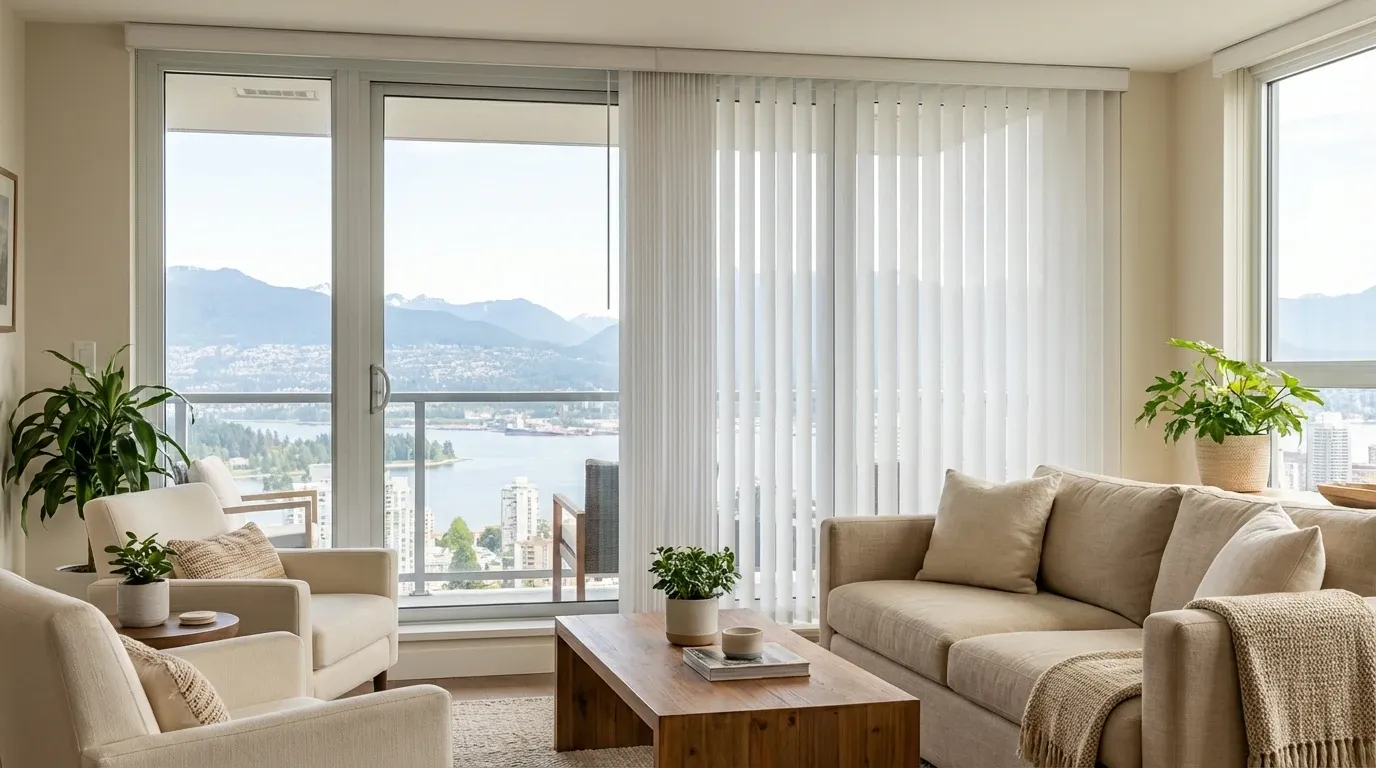
HT Blinds is Vancouver's factory-direct window coverings manufacturer. We build custom vertical blinds locally, then measure and install them with our own crew. Smooth and textured vanes, multiple stack directions, sized to your exact door or window opening, with a typical turnaround of 2–3 weeks from measurement to installation. The most cost-effective way to cover a wide opening or a sliding door. No middlemen. No markup. No overseas lead times.
We manufacture every vertical blind in-house — measured, cut to your opening, assembled, and quality-checked locally. Typical turnaround is 2–3 weeks from measurement to installation.
The crew that measures your doors and windows is the crew that installs your blinds. One accountable team from first measurement to final fit. No middlemen, no markup, no handoffs.
Every vertical blind passes the HT Five-Point Check before it ships and is covered by the HT Worry-Free Warranty — vanes, headrail, and carriers. If a vane is ever damaged, we replace the single vane, not the whole blind.
No stock sizes, no on-site trimming. Smooth or textured vanes in a range of neutral colours, with left, right, or split stack matched to your door's slide direction and traffic flow.
Choose the vane finish, then refine by colour. Smooth and textured fabric vanes come in a range of neutrals; rigid PVC vanes are available for high-traffic, high-moisture, and commercial settings.
A clean, minimal finish in a crisp, uniform line. The most popular choice for offices and modern homes — typically white or off-white. Easy to operate and easy to wipe clean.
Subtle texture adds depth and warmth across a wide span. The right call for living rooms and large windows where you want a softer, more tailored look.
Stack direction is matched to the opening — the way your door slides and where you want clear access. Add a valance to finish the headrail.
Vanes draw to the left and stack on the left side, leaving the right side clear. Choose it when your door slides left, or when furniture and walkways favour clearing to the right.
Vanes draw to the right and stack on the right side, leaving the left side clear. Choose it when your door slides right, or when the room flows better with the stack on the right.
Vanes part from the centre and stack to both sides for a balanced, symmetrical opening. Open a little from the middle, or clear the whole window. Best for centred windows and very wide spans.
A clean valance covers the headrail for a finished, built-in look.
Vertical blinds operate by hand — simple, reliable, and child-safe. For motorized coverage on sliding doors and wide windows, we build motorized roller shades and panel track systems.
One wand does both jobs: rotate it to tilt the vanes for light and privacy, then draw it to stack the vanes and clear the opening. No cords, no chains — a clean, child-safe operation. Vertical blinds are manual; for hands-free operation on a wide span, see motorized roller shades or panel tracks.
Patio doors, sliding doors, and wide windows across Metro Vancouver — homes, offices, and rental properties. Left stack, split stack, smooth and textured vanes — see how custom vertical blinds come together in real spaces.
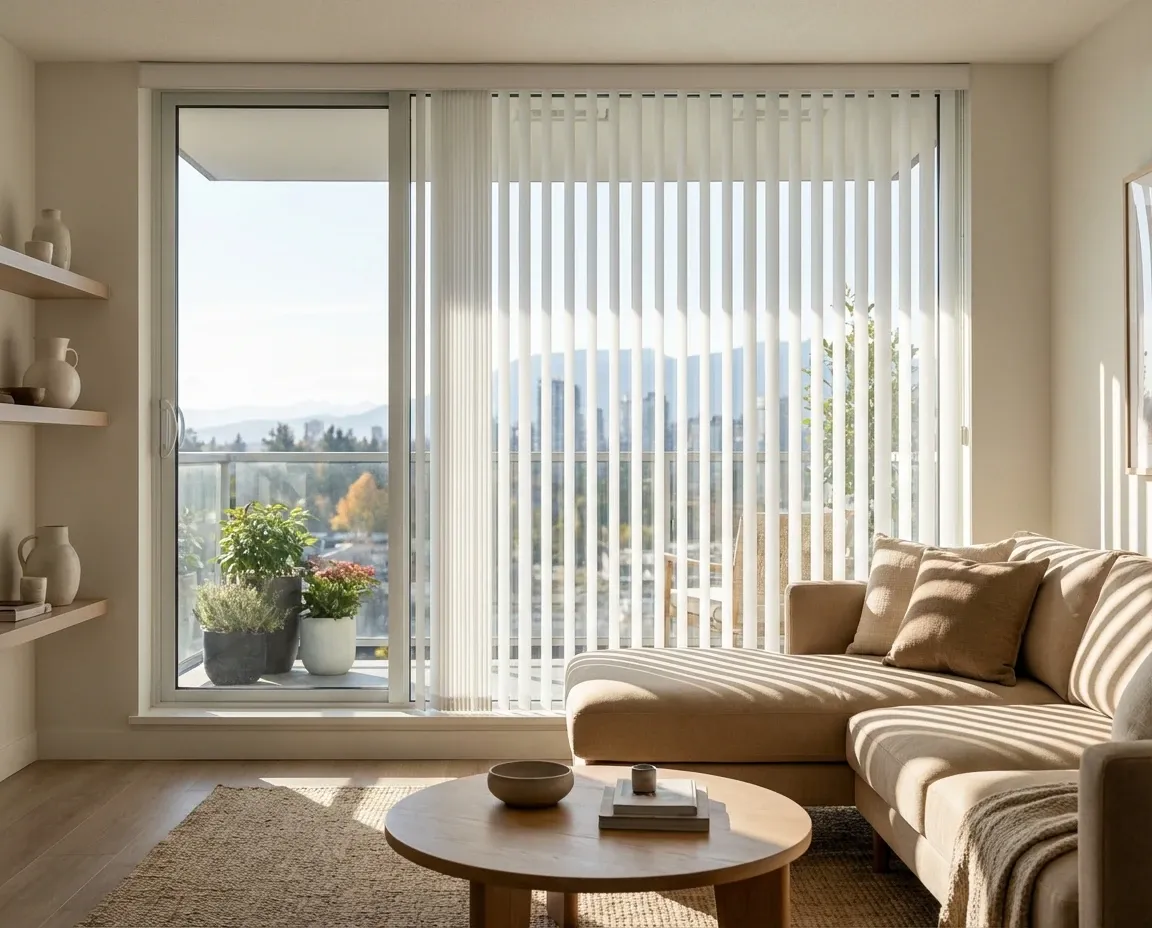
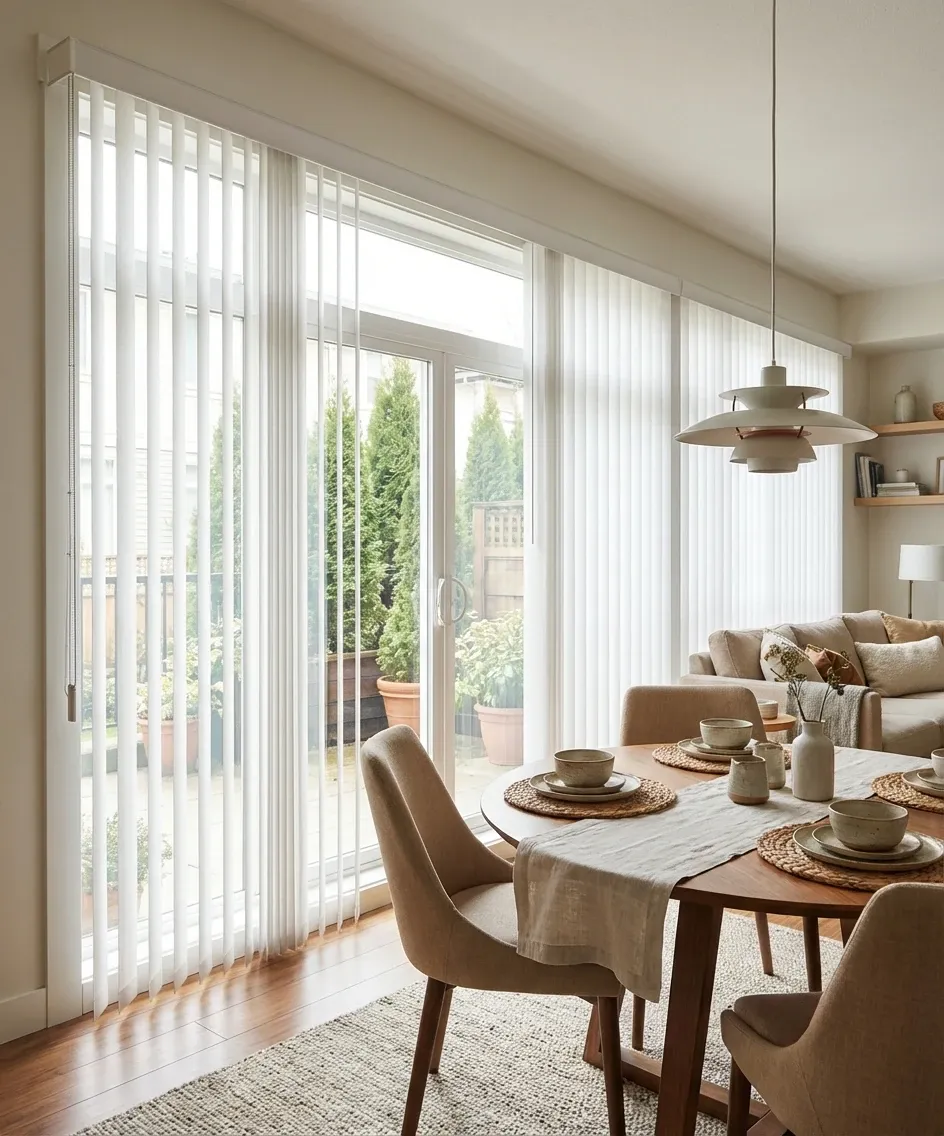
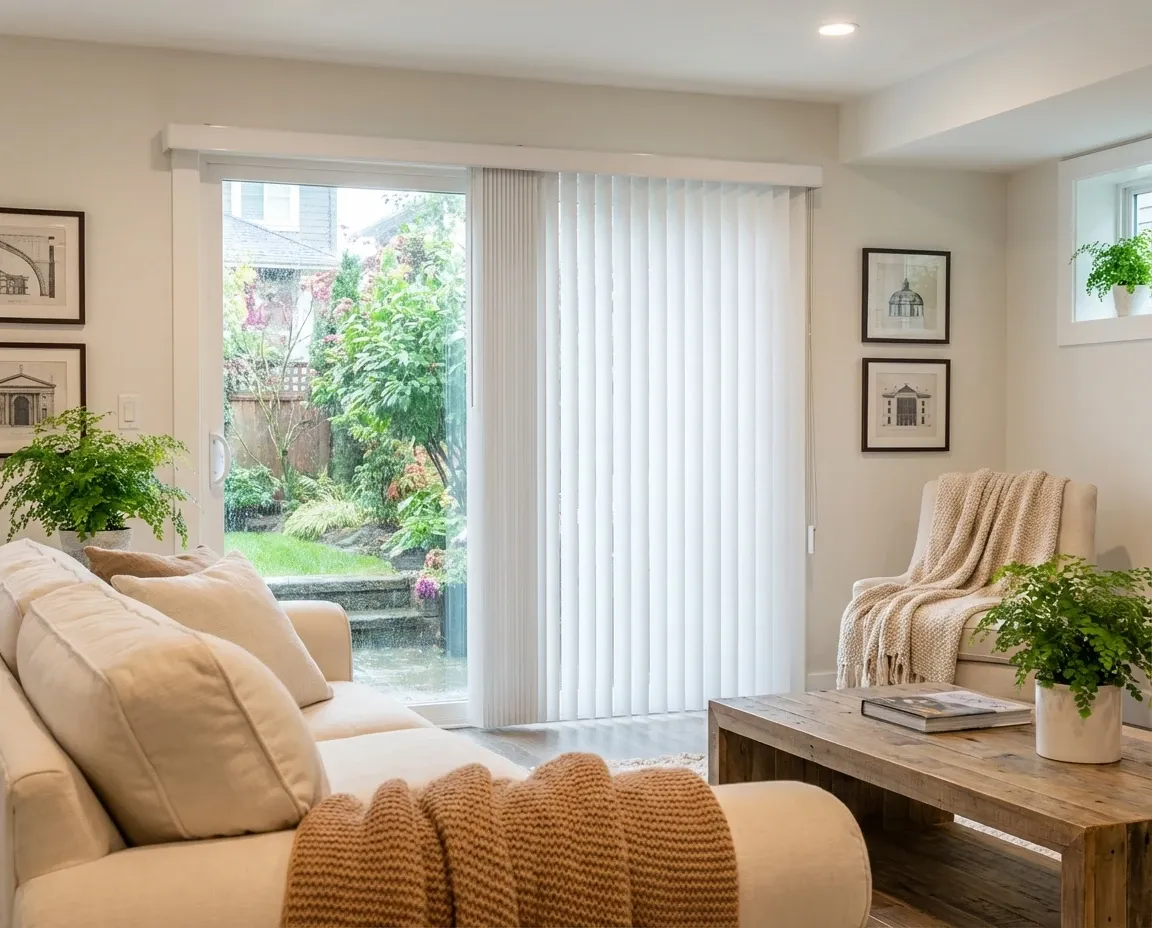
We measure every opening — exact width and drop, mounting depth, and your door's slide direction.
Choose vane style, colour, stack direction (left, right, or split), and valance. We match the configuration to how you use the opening.
Cut, assembled, and quality-checked locally — made to your exact opening, not stock sizes.
Our own crew installs and fits every blind. Typical turnaround: 2–3 weeks from measurement to installation.
Covers vanes, headrail, and carriers, backed by 25 years of local manufacturing and a dedicated service-request system. Replacement vanes available through our service team.
Every blind passes before it ships: operation, function, durability, finish, and dimensional accuracy.
Select vertical blind vane fabrics carry fire-rating certifications for commercial, institutional, and hospitality projects.
Vertical blinds hang from a headrail on individual carriers. Each vane hangs straight down and draws to the side to clear the opening, so you walk through a patio or sliding door without lifting anything. A single wand does the work: rotate it to tilt every vane together — fully open for the view, partly tilted for diffused light, fully closed for privacy — then draw it to stack the vanes out of the way.
The vertical orientation is the whole point. Horizontal blinds sag and bow across wide spans; vertical vanes hang straight no matter how wide the opening. That makes vertical blinds the right product for sliding doors, patio doors, and window walls that other blinds can't cover cleanly — and it's why they remain one of the most widely used window coverings across Canada for door-height openings.
Stacking direction is matched to the opening. Left stack draws everything to the left, right stack to the right, and split stack parts from the centre to both sides. Match it to the way your door slides and where you want clear access — left or right stack for a door that slides one way, split stack for a centred window or a symmetrical look.
Vanes come in smooth or textured fabric in a range of neutral colours, with rigid PVC vanes available for high-traffic, high-moisture, and commercial settings. Closed vanes overlap to give strong daytime-to-night privacy and cut most incoming light — darker than most horizontal blinds when shut. For true blackout on a large opening, a roller shade with side channels is the better product. Vertical blinds are privacy-grade, not blackout-grade.
Choosing between vertical blinds and a roller shade on a sliding door comes down to how you use it. Vertical blinds clear the opening by drawing aside, so they suit doors you walk through every day. A motorized roller shade or a panel track gives a sleeker line on openings that are more window than doorway. Vertical blinds are manual — for hands-free operation on a wide span, see motorized roller shades and panel tracks. Against faux wood blinds, the deciding factor is width: vertical blinds for openings past about 72 inches and for doors, faux wood for standard windows under 72 inches that want horizontal slats. Vertical blinds also stay the most cost-effective way to cover a large opening — the lowest price per square foot of any covering — which is why they’re standard in offices and rental properties as well as homes. We build them all locally, from headrail to vane, so condo, townhouse, office, and rental projects across Metro Vancouver get one accountable result.
Sliding doors, stack direction, replacement vanes, and motorization — answered directly.
Vertical blinds — they're designed for it. They draw to the side to clear the opening for walk-through access, and they cover spans wider than any horizontal blind can handle. Left stack, right stack, and split stack let you match the blind to your door's slide direction and the room's traffic pattern.
No. Our vertical blinds are manual, with wand tilt and draw operation. For motorized coverage on sliding doors and large openings, consider a motorized roller shade or a panel track. Panel tracks slide horizontally like vertical blinds but use full fabric panels instead of vanes.
Yes. Replacement vanes are available without replacing the whole blind. Send us your order details and we'll match the vane style, colour, and size. It's a common request for rental properties and offices, where the occasional vane gets damaged.
Yes — they're one of the most popular commercial coverings. They're cost-effective, durable, and easy for anyone to operate. Wand tilt controls glare on screens, wand draw opens the view, and the headrail and carriers hold up to high-frequency daily use in offices, meeting rooms, and reception areas. Volume pricing is available.
Left stack draws all vanes to the left, right stack draws them to the right, and split stack parts from the centre to both sides. Choose based on which side of the opening you want clear when the blind is open. For a sliding door, match the stack to the direction the door panel slides; for a centred window, split stack gives a balanced look.
They give strong privacy when fully closed — overlapping vanes cut most incoming light, darker than most horizontal blinds in the closed position. But for true blackout on a large opening, a roller shade with side channels eliminates light completely. Vertical blinds are privacy-grade, not blackout-grade.
For sliding doors and openings wider than about 72 inches, choose vertical blinds — they draw to the side for access. For standard windows under 72 inches, faux wood blinds give you tiltable horizontal slats and a more traditional look. Both are manual, durable, and cost-effective — they’re different products for different window types.
We'll match you with the right vertical blind setup for your home or project.
Talk to a Product SpecialistTell us your door and window openings — we'll size the right vertical blind and match the stack direction to how you use the space. Free measurement and quote for Metro Vancouver homes. Faster quote: include your opening count, widths, and whether you want left, right, or split stack.
Request a QuoteWe also handle offices, rental portfolios, multi-family, and larger project work — standardized finishes, volume pricing, and replacement vanes on demand — plus a trade and vendor program for builders, designers, and property managers. Ask us.
Trade & Builder Access