Built locally, not imported
We manufacture every roller shade in-house — measured, cut, assembled, and quality-checked locally. Typical turnaround is 2–3 weeks from measurement to installation.
 BLINDS
 Custom roller shades are the most versatile window covering for Vancouver homes — one fabric panel, clean lines, and light control from solar screening to full blackout. They work in every room, suit every window size, and pair with motorization for hands-free daily use.
Installed in 2,400+ Metro Vancouver homes and commercial projects. Backed by the HT Worry-Free Warranty.
4.3 out of 5
60 Google reviews
From customers across Metro Vancouver.
HT Blinds is Vancouver's factory-direct window coverings manufacturer. We build custom roller shades — also called roller blinds — locally, then measure and install them with our own crew. 50+ fabrics across five openness levels, with a typical turnaround of 2–3 weeks from measurement to installation. No middlemen. No markup. No overseas lead times.
We manufacture every roller shade in-house — measured, cut, assembled, and quality-checked locally. Typical turnaround is 2–3 weeks from measurement to installation.
The crew that measures your windows is the crew that installs your shades. One accountable team from first measurement to final fit. No middlemen, no markup, no handoffs.
Every roller shade passes the HT Five-Point Check before it ships and is covered by the HT Worry-Free Warranty — fabric, hardware, and motors.
No stock sizes, no guessing. 50+ fabrics across five openness levels — solar, light-filtering, privacy, and blackout — cut to your exact measurements.
Start with the fabric family, then refine by openness, colour, and performance target.
A tighter solar screen that cuts heat and glare while keeping a clearer view. Best for bright south- and west-facing exposures that need the most control without going fully opaque.
Balanced sun control with comfortable visibility. Cuts glare and helps manage heat while keeping a room feeling open. The most popular openness for most rooms and orientations.
A more open solar screen that keeps the view sharp while softening harsh sun. Best when visibility comes first and you still want daytime glare control — ideal for north-facing rooms.
Daytime-to-night privacy with a soft, diffused finish. A clean, versatile choice for street-facing and everyday rooms — light comes through, the view-in does not.
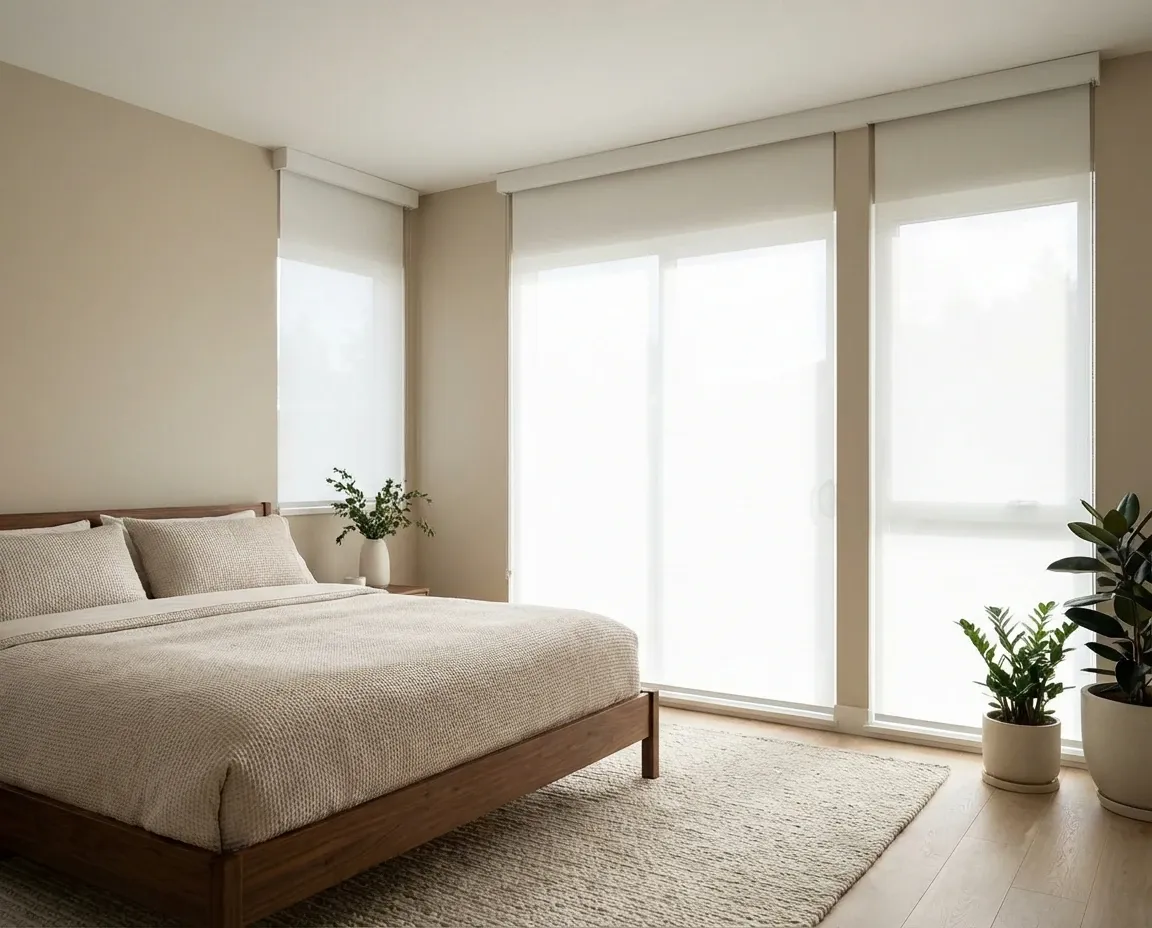
Maximum light control with a clean, modern look. Blackout fabric blocks light through the panel for bedrooms, nurseries, and media rooms. Pair with side channels to seal the edges for true darkness.
Pick the look, then we engineer it to the site — ceiling conditions, mounting depth, and window geometry.
Our standard, minimalist mount — no valance, no top treatment. The fabric rolls close to the glass to reduce light gaps. The cleanest, most architectural profile.
A clean, contemporary headrail cover that hides the roll for a built-in look. Available in white, black, or anodized silver, in 3" or 4" sizes.
An open roll that runs the fabric off the back of the tube, away from the glass. Hides the roll and mechanism, and adds clearance around handles, cranks, and trim.
A softly contoured cassette with a matching fabric insert. Conceals the hardware for a refined, finished edge — at home in modern interiors.
Aluminum side channels seal the light gap along both edges of the shade. Paired with blackout fabric they deliver true room darkness — and add a bit of insulation at the window.
A PVC light block that installs in minutes to cut edge light and add privacy. Inside mount only, in five colours.
Finish the shade with a clean bottomrail — choose a hem bar, an exposed slim bar, or a fabric-wrapped insert.
Two shades on one continuous headrail — built for wide windows that need a uniform line. Run them together or independently for flexible light control.
From chain clutch to full smart-home automation. Match the control to how you use the room and how often you adjust.
Precise, clutch-controlled positioning on a continuous beaded chain — poly or metal. The Chain Guard shroud keeps the chain contained for a cleaner, safer finish.
Cord-free operation — a gentle pull raises the shade, an easy guide lowers it. No dangling cords. The tidiest option for a modern window.
Button-controlled lift and lower on a slim, rechargeable wand. No dangling cords, no remote to misplace. A simple step up from manual.
Our own motor line in battery, DC or AC, controlled by remote, app, or voice. Start manual and upgrade later, or go motorized from day one.
The widest range of control and integration. Works with Somfy app control, voice, and building automation — scheduling, scenes, and grouped shades that move in unison.
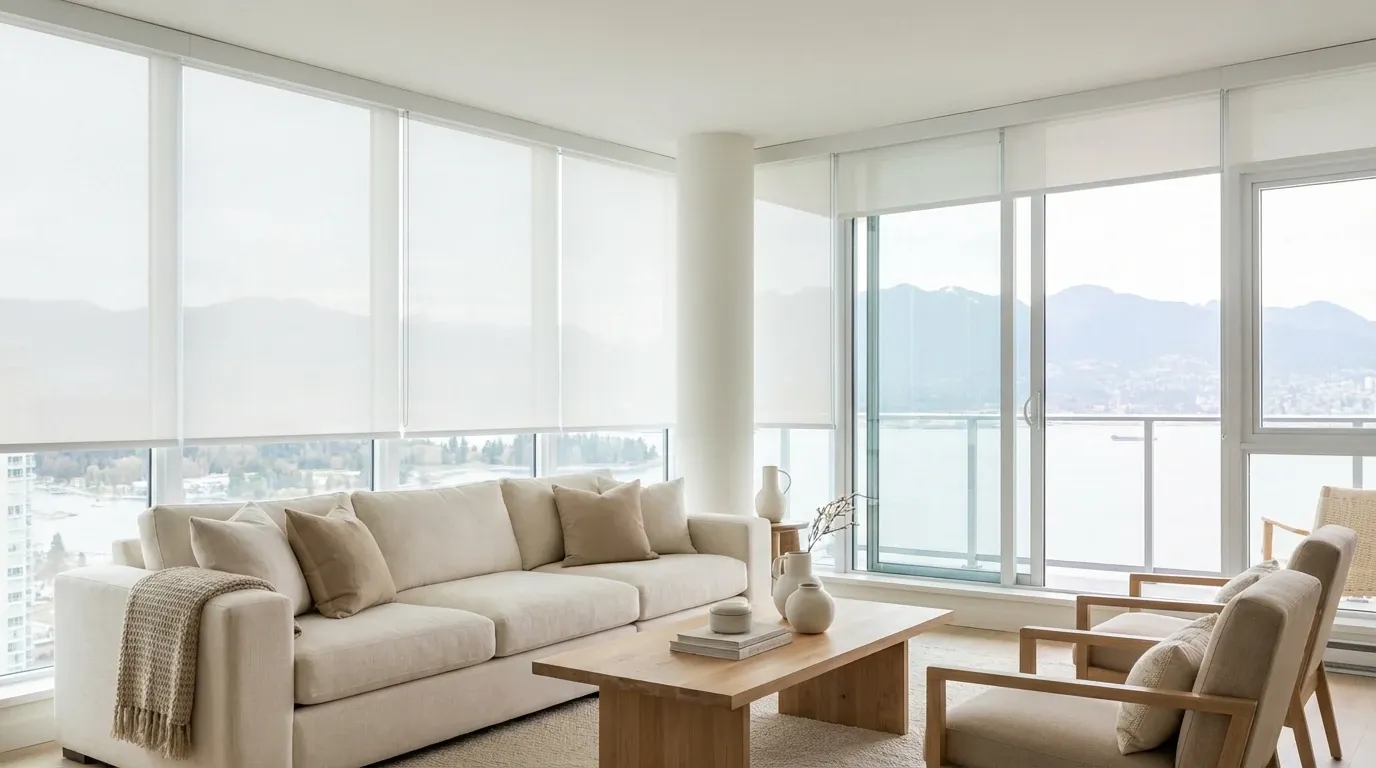
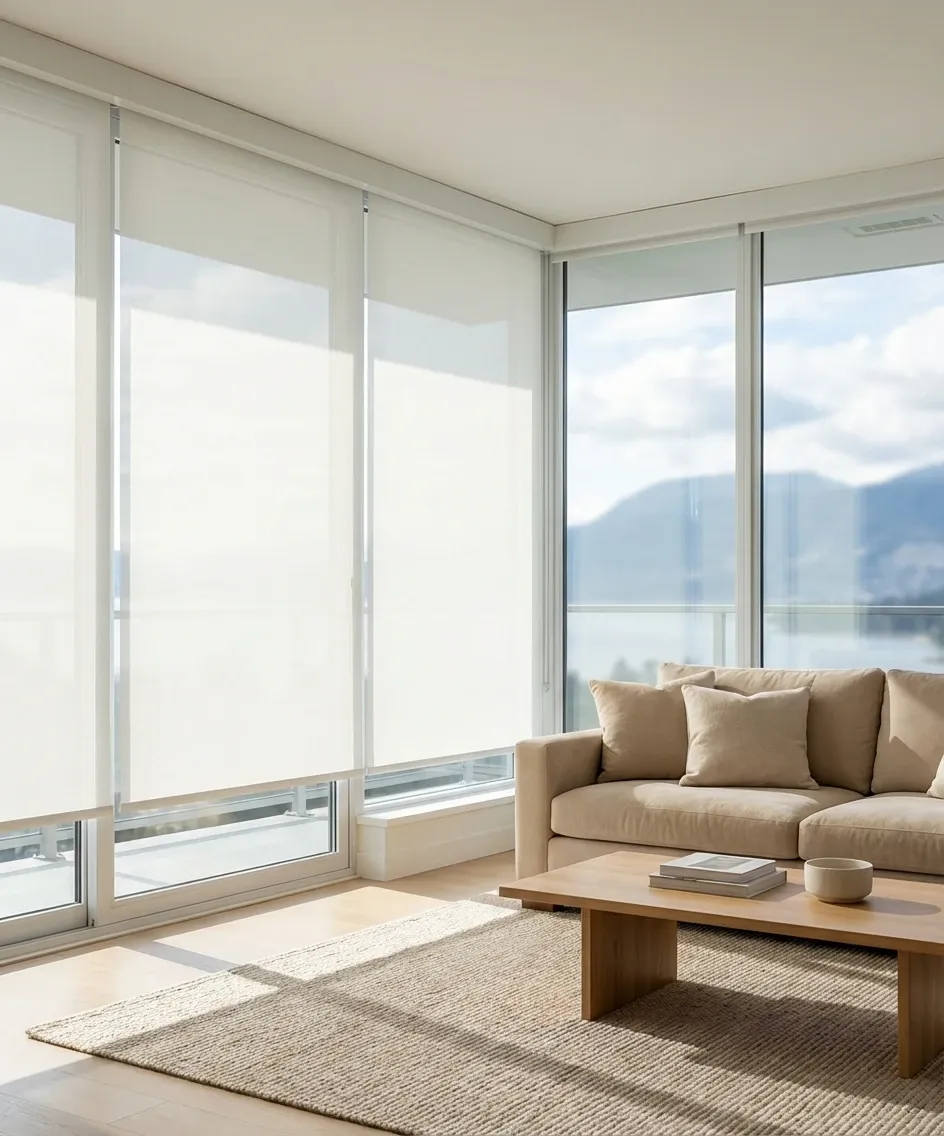
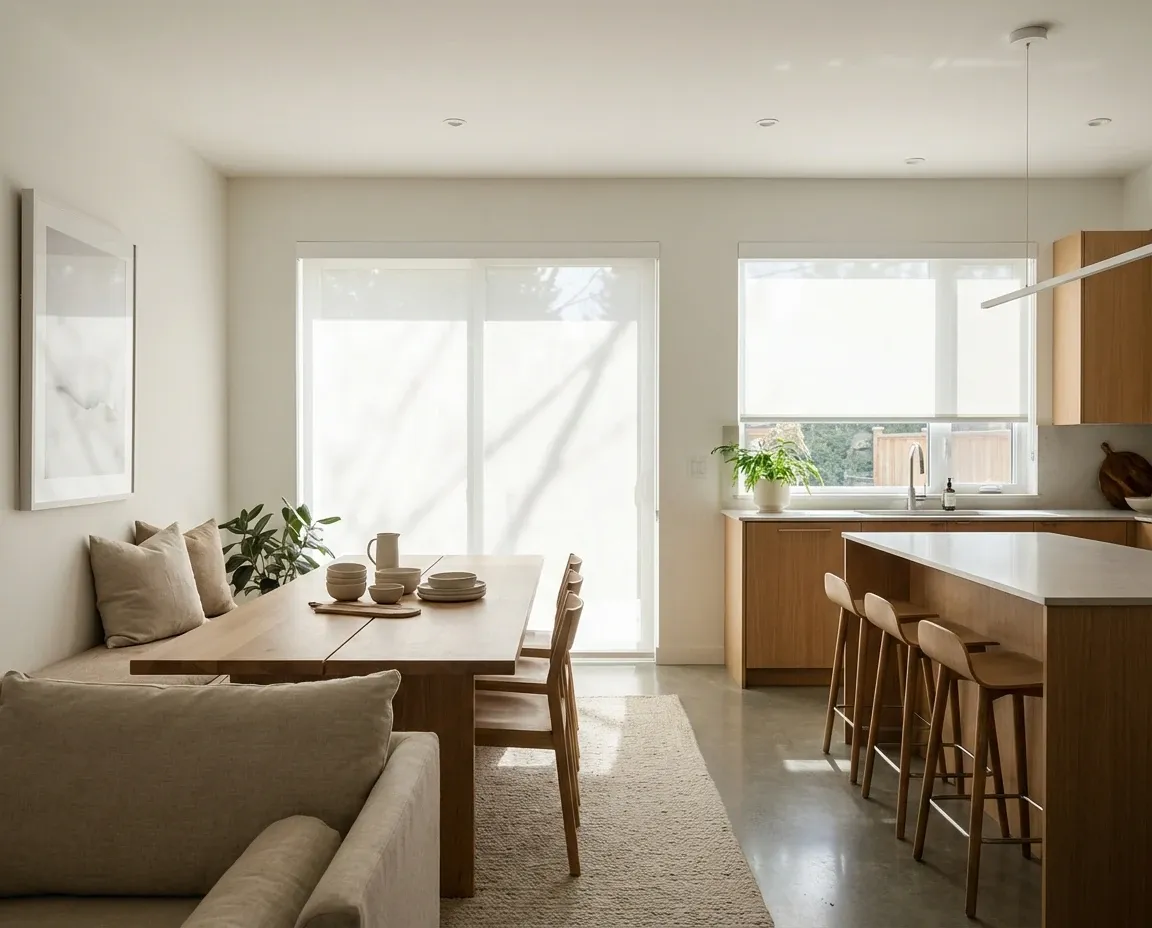
Condos, homes, and commercial spaces across Metro Vancouver. Different fabrics, hardware finishes, and mounting styles — see how custom roller shades come together in real spaces. Solar screens in Coal Harbour high-rises, blackout in Kitsilano bedrooms, fascia-mounted in Burnaby townhouses.
We measure every window — exact openings, mounting depth, and ceiling conditions.
Choose fabric, openness, hardware finish, and control. We match the system to each room and orientation.
Cut, assembled, and quality-checked locally — made to your exact measurements, not stock sizes.
Our own crew installs and fits every shade. Typical turnaround: 2–3 weeks from measurement to installation.
Covers fabric, hardware, and motor systems, backed by 25 years of local manufacturing and a dedicated service-request system.
Every shade passes before it ships: operation, function, durability, finish, and dimensional accuracy.
Select roller shade fabrics carry fire-rating certifications for commercial, institutional, and hospitality projects.
A roller shade is a single panel of fabric wrapped around an aluminum tube. Pull it down to cover the window; roll it up to clear the view. The simplicity is the point — fewer moving parts than blinds, cleaner sightlines than curtains, and a wider fabric range than any other shade type.
What makes the difference is the fabric. Solar screens — Solis 1%, 3%, and 5% from HT Performance Fabrics — cut glare and block up to 99% of UV while preserving your outward view; a lower openness percentage means a tighter weave, more glare control, and clearer daytime privacy. Light-filtering fabrics soften daylight without a view-through — the room glows, but nobody sees in during the day. Privacy fabrics block the view-in while still letting diffused light through. Blackout fabrics eliminate light entirely, and paired with side channels they seal the edges for true darkness.
Match the fabric to the room. Bedrooms, nurseries, and media rooms get blackout. Living rooms and kitchens get solar or light-filtering. Home offices get glare reduction on screens. South- and west-facing windows — common in Vancouver high-rises — take the lowest openness for the most control; north-facing rooms can go more open. For high-moisture spaces like steam showers, faux wood blinds are the better product.
Choosing between roller shades and zebra shades? Roller shades give you one continuous fabric — the widest range, including true blackout. Zebra shades shift between sheer and solid without raising the shade, which suits rooms where you adjust light through the day. Most homeowners choose roller shades for bedrooms and zebra shades for living areas.
Hardware sets the look. A cassette or fascia hides the roll for a built-in finish; an open roll keeps the profile minimal; a reverse roll brings the fabric closer to the glass; side channels seal light at the edges. Every roller shade we build supports motorization — start with a manual chain or cordless lift and upgrade to HT Smart Motors or Somfy automation later, or go motorized from day one. As a local roller blinds supplier and manufacturer, we control the whole process — from HT Performance Fabrics to final installation — so condo, townhouse, and new-build projects across Metro Vancouver get one accountable result.
Fabric selection, motorization, installation, and ordering — answered directly.
For most condos, a solar screen (Solis 3% or 5%) in living areas paired with blackout in bedrooms. Solar screens reduce glare and UV while preserving your view of the mountains or water — critical for south-facing and west-facing units. Blackout fabric with side channels gives bedrooms real darkness. Cassette or fascia mounting creates a clean, built-in look that suits modern condo interiors. We measure and install in occupied units with building access coordination — elevator bookings, restricted hours, and staged installs are standard for us.
Solar fabrics have an openness percentage (1%–5%) — they reduce glare and UV while preserving your outward view. Light-filtering softens daylight without a view-through — the room glows but nobody sees in during the day. Privacy blocks the outside view entirely while still letting diffused light in. Blackout blocks all light — best for bedrooms, nurseries, media rooms, and hotel guestrooms. Most homes use a mix: solar or light-filtering in living areas, blackout in bedrooms.
Yes. Every roller shade we build supports motorization. HT Smart Motors are rechargeable and wire-free — no electrician needed, they install in minutes and last 6–9 months per charge depending on use. Somfy systems add app control, voice integration with Alexa, Google Home, and Apple HomeKit, and building automation for commercial projects. You can also start with a manual chain clutch and upgrade to motorized later without replacing the shade.
1% gives the most glare and heat reduction with the clearest outward view — best for south-facing and west-facing windows with intense afternoon sun. 5% lets in more natural light and feels more open — better for north-facing rooms where glare isn't the issue. 3% is the most popular choice — it balances view preservation, glare control, and UV protection for most orientations. Your window direction, floor height, and room use determine the right level. We'll recommend during your in-home consultation.
Standard roller shade fabrics handle normal bathroom humidity without issue. For high-moisture environments — shower enclosures, pool areas, steam rooms — faux wood blinds are the better product because the PVC composite is fully moisture-proof.
Typical turnaround is 2–3 weeks from measurement to installation. We manufacture locally in Metro Vancouver — no overseas shipping delays, no customs holds. Commercial and large-quantity orders are scheduled to match your project timeline, and we can prioritize rush orders when needed.
Open roll, fascia, curved cassette, and reverse roll mounting. Side channels for blackout-grade light sealing. Bottomrail options include standard hem bar, exposed roll, and fabric-wrapped. All hardware comes in standard white, black, and anodized finishes — custom colour matching available for design-sensitive installations.
Roller shades use a single panel of fabric that rolls up and down. Blinds use horizontal or vertical slats that tilt for light control. Roller shades offer a cleaner look, wider fabric range (including solar screens), and motorization compatibility. Blinds (faux wood, vertical) offer more precise tilt control and are better for bathrooms and sliding doors. For most rooms in a Vancouver home, roller shades are the more versatile choice.
We'll match you with the right roller shade system for your home or project.
Talk to a Product SpecialistWe measure, build, and install custom roller shades throughout the Lower Mainland — including:
Tell us your windows — we'll recommend the right roller shade system. Free measurement and quote for Metro Vancouver homes. Faster quote: include your window count, sizes, and whether you need solar, light-filtering, or blackout.
Request a QuoteWe also handle office fit-outs, multi-family, and larger project work — and run a trade and vendor program for builders, designers, and property managers. Ask us.
Trade & Builder Access